Subverting Subversive Images: The Failure of Post-Modern Art to Influence Widespread Representational Change
If the intent of subversive imagery, especially Post-Modern art, is to challenge stereotypical representations, why are racist, misogynistic and objectifying views still prevalent in mass media commentary? Were post-modern artists just ‘preaching to the converted'?
By analysing social media reaction to Tibor Kalman’s series ‘What if…’, specifically the manipulated image of Arnold Schwarzenegger, I aim to show how subversive images ‘work’ only when presented to an audience which shares the artist’s point of view.
Where subversion falls short I suggest naturalisation, as a more effective counter to stereotypes.
Tibor Kalman’s image of Arnold Schwarzenegger (fig.1) aims to challenge the viewers perceptions of people of colour. By presenting a well known and understood celebrity as if they were a person of colour, the viewer is asked to consider how they respond to this change in skin tone. Does it affect the characteristics associated with Arnold? Does it change Arnold’s position in society? But also, how are people of colour represented differently in popular culture and mass media? The subversive image then, aims to challenge the conventions of representation. In Post-Modern art we see this as satire, masquerade and irony.
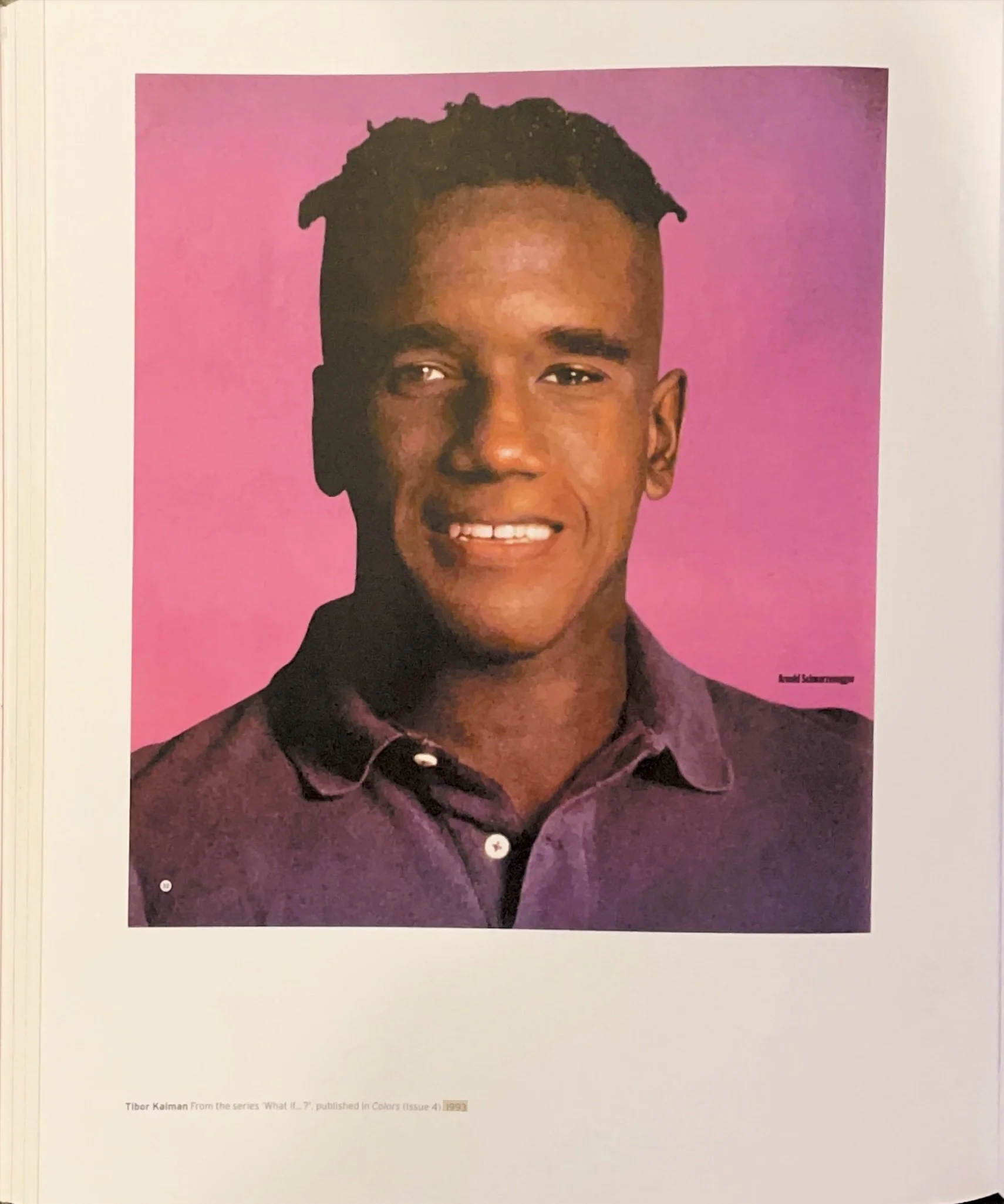
fig 1
To understand how subversive images challenge convention and representation, it is important to understand what representation and convention are.
Representation relates to the use of Semiotics in the depiction of ‘other’. Here, the ‘other’ being marginalised groups. What Saussure posited with semiotics was that language is a systems of signs, made up of two elements, the signifier and the signified.
As described by Gillian rose;
“The sign consists of two parts, which are only distinguishable at the analytical level; in practice they are always integrated into each other. The first part of the sign is the signified. The signified is a concept or object, let’s say ‘a very young human unable to walk or talk’. The second part is the signifier. The signifier is a sound or an image that is attached to a signified.”
(Rose, 2013:74)
Rose highlights here that the signifier and signified are intrinsically connected, inseparable. Therefore, how we feel, understand or associate with a signifier is also intrinsically connected with the signified.
Rene Magritte summarises this connection between semiotics and representation in addressing criticism of The Treachery of Images (1929), (fig. 2)

Fig. 2: The Treachery of Images (1929)
“The famous pipe. How people reproached me for it! And yet, could you stuff my pipe? No, it’s just a representation, is it not? So if I had my picture ‘This is a pipe,’ I’d have been lying!”. (Magritte, s.d)
Magritte argues how the sign, the painting, conflicts with the conventional understanding of signification. If it looks like a pipe, then it is a pipe?
If any image can be considered a signifier, and if Magritte’s point that what is signified is not inherently ‘true’, is accepted, then the issue of representation is, what ‘meaning’ is also attached to the signified.
This semiological aspect of representation reveals the issue of reception. Consider two armies communicating in secret, a message is encoded in order to maintain secrecy, and decoded when received. To receive the message correctly, a ‘code’ is required. Semiotics adopts this term when describing the translation of signifier and signified.
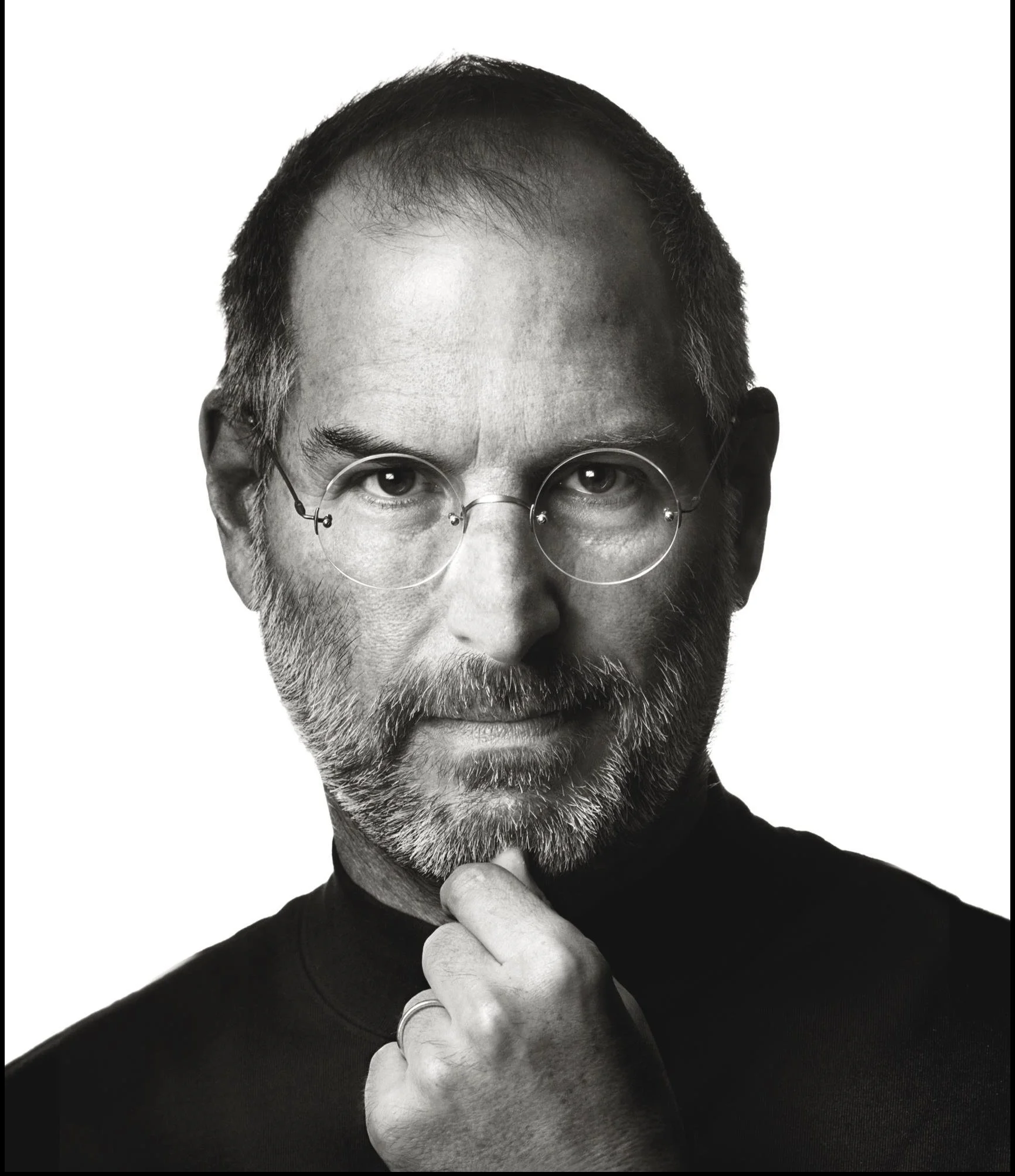
The use of well know and widely understood codes, is the basis of convention. An example of portrait convention would be the resting of the chin on a curled fist, a signfier of intelligence and contemplation. As seen in Watson’s portrait of Steve Jobs (fig.3) and Rodin’s sculpture of The Thinker. (Fig.4)

Returning to the question, why subvert conventions of representation? Primarily, to challenge the stereotypically negative meanings which ‘conventional’ images of marginalised groups signified.
Stuart Hall (1997:18) refined the semiological concept of codes as, ‘Conceptual Maps’. A more nuanced definition, taking educational, historical, geographical, religious and ethical experiences into account. Hall recognised that even within the same language system, signs, and their meaning, will be understood differently. Thus, convention is a code which only ‘translates’ within the shared conceptual map of the intended audience.
“It is us - in society, within human cultures - who make things mean, who signify. Meaning will always change, from one culture or period to another.” (Hall, 1997:61)
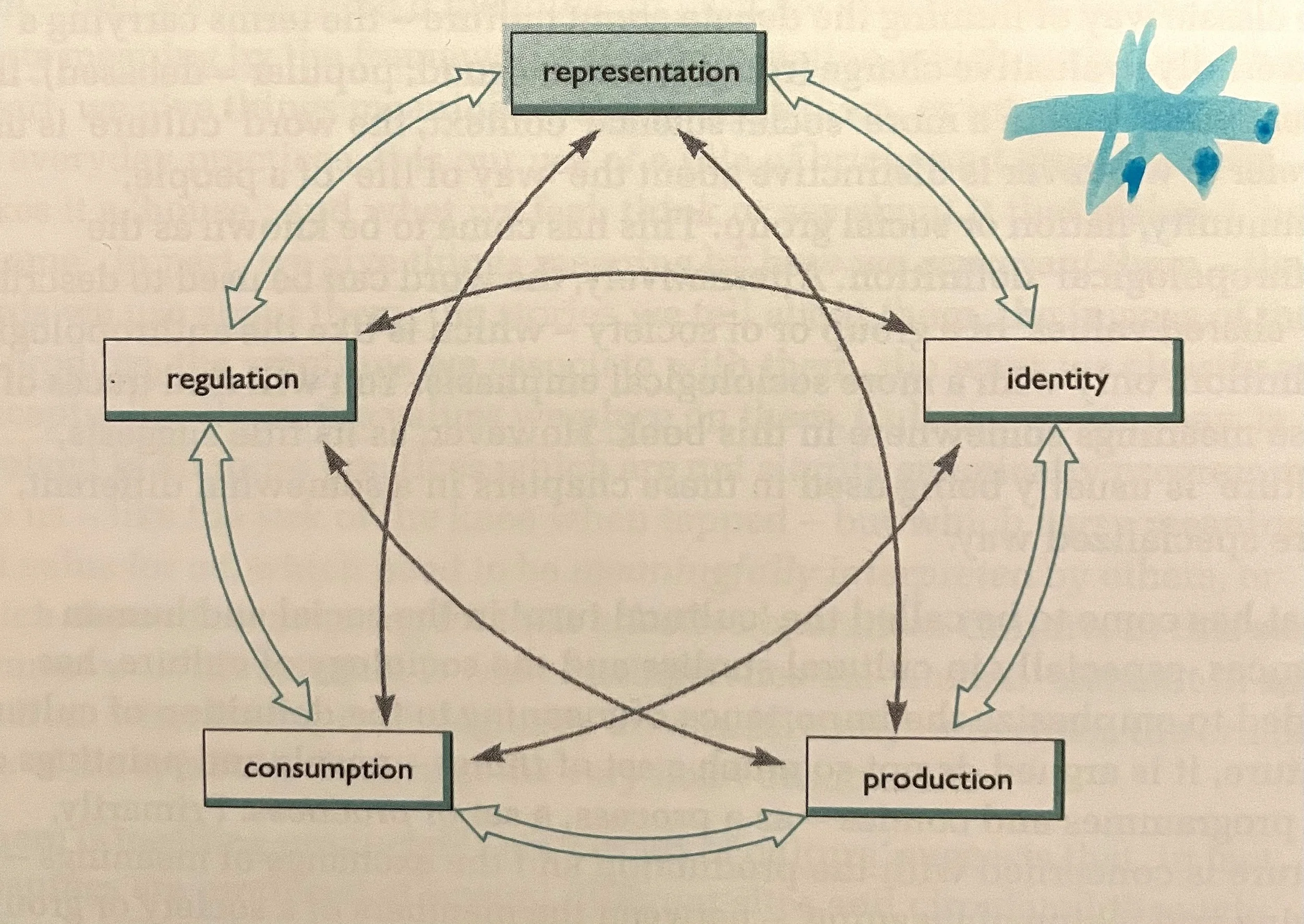
Fig. 5 The Circuit of Culture (1997)
Hall (1997:1) proposes, with the Circuit of Culture, (fig.5) that instead of a representation reflecting the ‘true’ characteristics of a subject, the ‘meaning’ of the image was actually ‘constructed’. Through a circular process of interconnecting points, meaning is created, attached, approved, distributed and absorbed by those who both make and consume images.
In order to challenge the dominant, stereotypical representations of marginalised groups, subversive images attempt to change the ‘discourse’ surrounding representation.
Michel Foucault considers discourse as the rules within which discussions of a topic are allowed to take place (Gutting, 2005:33). A power mechanic which enables the controller of the discussion to dismiss, and in some cases punish, those who look to address the faults of the discourse, “The power to punish is not necessarily different from that of curing or educating.” (Gutting, 2005:79).
In image making; the conventions of genre; purpose; and increasingly in a social media world; audience engagement, determine the ‘rules’ of discourse. The subversive image then, is at risk of being rejected on the grounds of breaching these arbitrary rules.
This leads to Foucault’s call for a new ‘discursive formation’ (Hall, 2001:75) a coherent, direct and unionised ‘turn’ in order to fundamentally shift the boundaries of, in this case, how marginalised groups are represented.
Post-Modern subversion was an attempt to create this discursive turn, as seen in the widespread creation of artworks challenging every aspect of the mediums, uses and readings, of images. Resulting in works which were openly staged, created conflicting responses, left open questions, portraying subjects in different settings and roles, or omitting them completely. The issue, however, remained how the image was received.
The critical success of post-modern artists such as Kalman, relied on the works being viewed within a specific ‘conceptual map’. An audience which has implicit knowledge, through critical awareness of purpose and intent. Presenting the problem that in order to successfully change widespread stereotypical representations, the work has to be accessible and widely distributed. However, images are often dismissed from the discourse, as ‘on the nose’ and on the other hand, the implicit nature of post-modern art, restricts accessibility. Be that academically; the point is missed, or physically; the image remains in the gallery.
Kalman’s image of Arnold Schwarzenegger has permeated mass media.
A Google image search for the term ‘Black Arnold Schwarzenegger’ (fig.6) shows how the search engine, and contributors to the internet, categorise and describe this image. Of the seven results, only one references the original context, (fig.7 & 8), and only in passing.


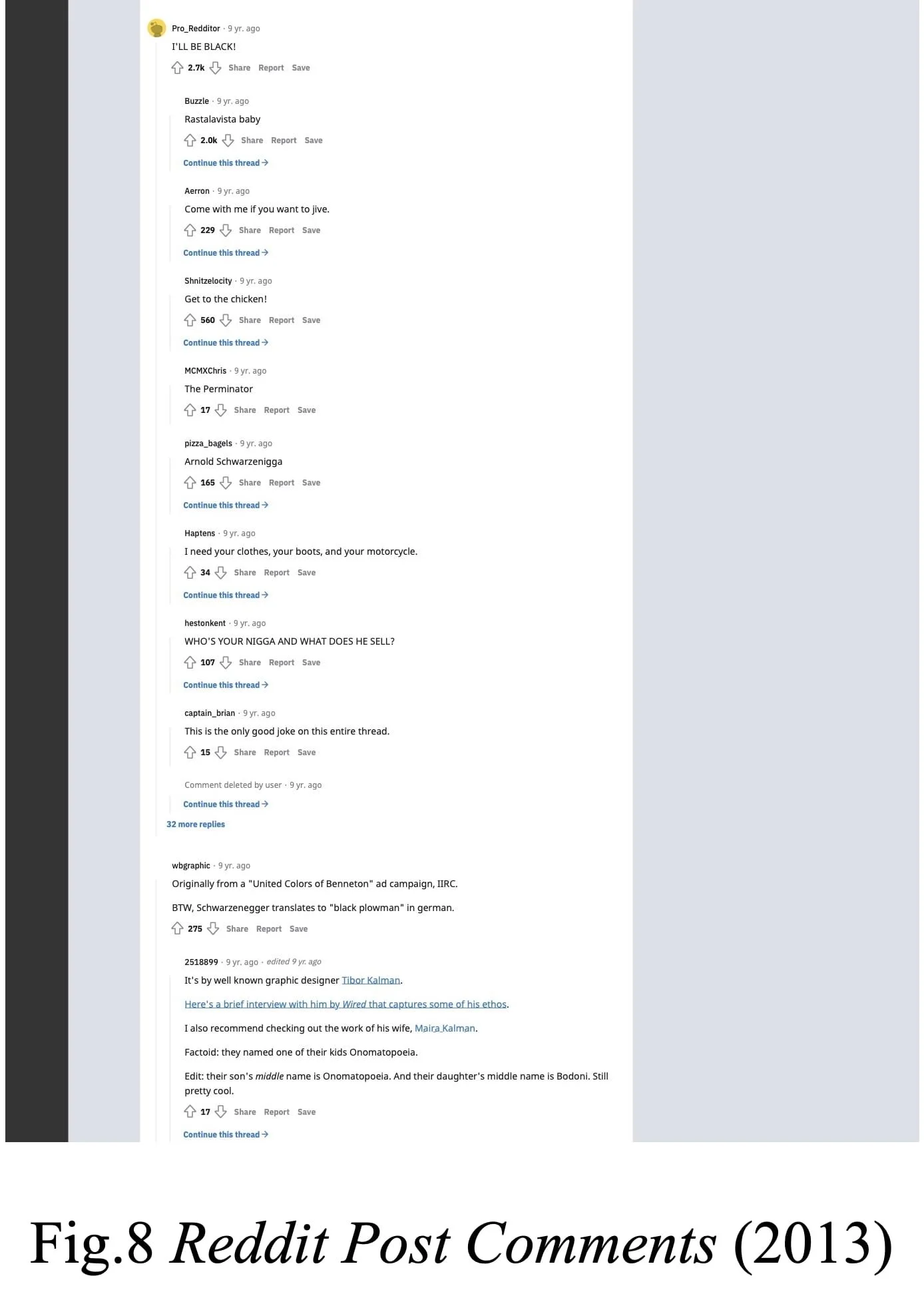
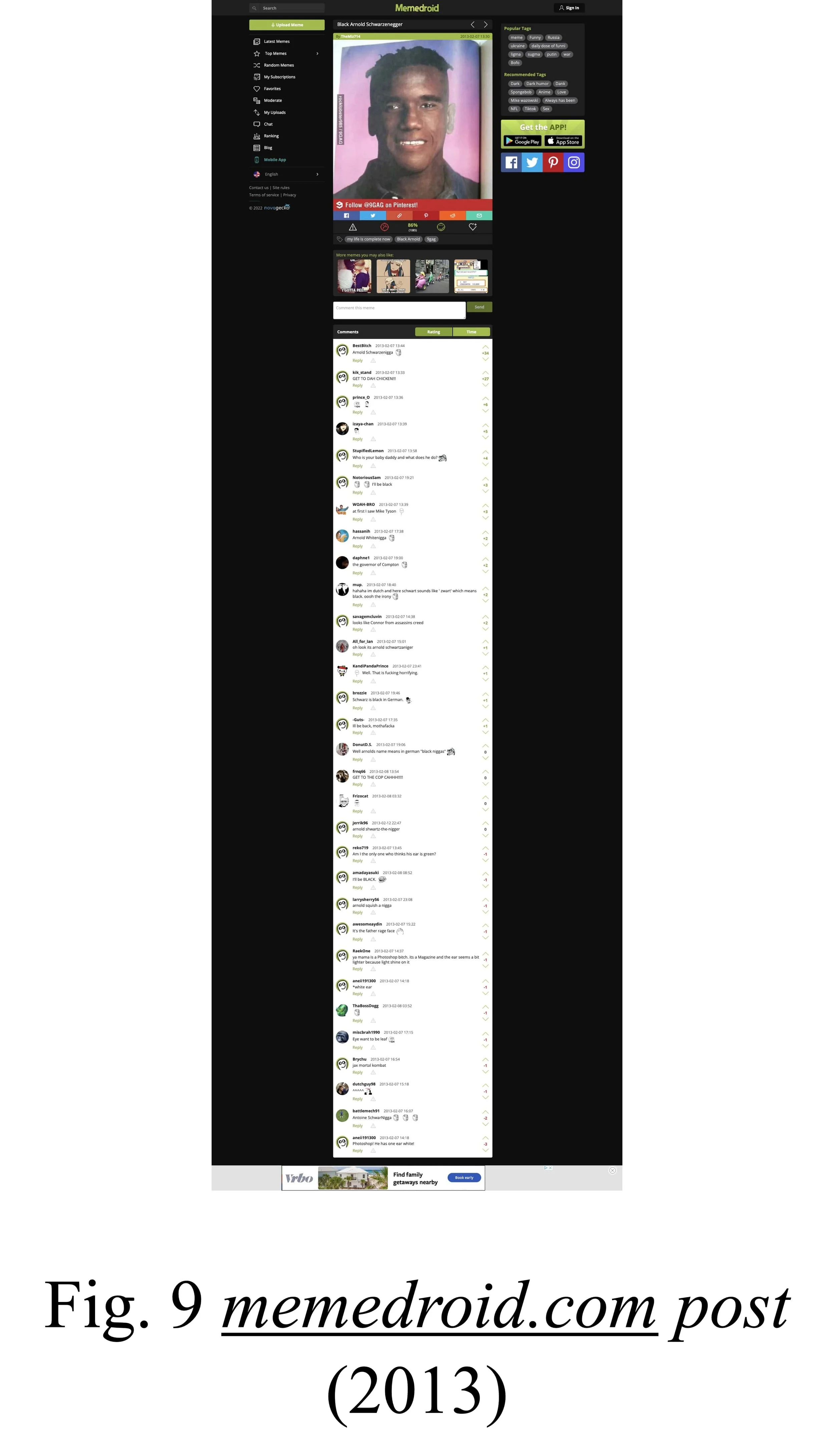
All other uses remove reference to it’s origin. Instead the image is re-presented alongside racist jokes and tropes. The worst example being the website memedroid.com (fig.9) which re-posts an earlier submission further reducing context, emphasising the racist intent. As per Hall’s Circuit of Culture, changing the meaning of the sign from a critique of negative representation, into an acceptable outlet for racism.
If the subversive image is only successful within academic discourse, how do we shift the discourse?
The creation of subversive images is still important and relevant when addressing this issue. One could argue that they have limited scope, if the purpose is to change the discourse. However the subversive imagery is often the start of the discursive turn. By creating an alternative conceptual map, subversive images influence the future regulation of images, albeit somewhat limited in influence. There will however, always be a crossover between those who create within the discursive turn and those who observe externally. The idea that art can change the world is perhaps naive, but as the turn is accepted and disseminated there will be an effect, however small.
My proposal then, is the widespread shift that Hall and Foucault call for, comes from the creation of images which naturalise ‘subversive' characteristics. Subversive in applying convention to counter, instead of support, negative meaning. Rather than satirising stereotypical representation, the key has been the images of everyday scenes and everyday people. Social media can be detrimental in promoting problematic imagery, due in part to engagement metrics, but has also provided accessibility to those previously excluded from the discourse. The montage effect of social media feeds, create a subversive composition. An almost endless juxtaposition. People of colour, celebrity, power and importantly, friends and family, all appear one after the other. Blurring the delineation of difference and with context often embedded into the platform or, as trends dictate, the image itself.
“Ultimately, it seems that many of the hopes for social media as the potential solution for ‘fixing’ representative democracy through interpersonal communication have not currently come to fruition. However it does not mean these platforms have not had a significant positive change to the conduct of representation and these platforms are certainly worthy of additional study.”
(McLoughlin, 2019:229)
Where social media can disseminate naturalising images of marginalised groups, the capitalist goal of profit, can result in homogenised representations (Gutting 2005:90). Removing culturally significant traits in order to make the representation more ‘palatable’ for the larger, often considered more profitable, ‘dominant’ identity.
Thank you
Thank you for taking the time to read this essay, I'd love to hear you thoughts and comments!
If you enjoyed this post, you may enjoy my other work, you can find me at;
https://harleybainbridge.com
https://www.instagram.com/harleybainbridge
and my YouTube at;
https://youtu.be/pkLqFIm4t-0
Illustrations
Fig. 1 Kalman, T (1993) From What If… [Photograph] In: Ewing, W.A. (2008) Face: the new photographic portrait. London: Thames & Hudson Ltd. p174
Fig. 2 Magritte, R (1929) The Treachery of Images At: https://en.wikipedia.org/wiki/The_Treachery_of_Images (Accessed 22/03/2022)
Fig. 3 Watson, A (2006) Steve Jobs At: https://profoto.com/uk/profoto-stories/albert-watson-steve-jobs
Fig. 4 Rodin, A (1886) The Thinker At: https://www.theartpostblog.com/en/thinker-by-rodin/
Fig. 5 Hall, S (1997) Circuit of Culture [illustration] In. Hall, S (1997) Representation: cultural representations and signifying practices. London ; Thousand Oaks, Calif: Sage in association with the Open University. p.1.
Fig. 6 Google Search (2022) [Screenshot] (Accessed 22/03/2022)
Fig. 7 Reddit Post by u/Ziggey with user comments (2013) [Screenshot] At: https://www.reddit.com/r/funny/comments/1crpqm/found_a_black_arnold_schwarzenegger_in_my/ (Accessed 22/03/2022)
Fig.8 Reddit Post by u/Ziggey with user comments (2013) [Screenshot] At: https://www.reddit.com/r/funny/comments/1crpqm/found_a_black_arnold_schwarzenegger_in_my/ (Accessed 22/03/2022)
Fig. 9 User post by The Miz 714 (2013) [Screenshot] At: https://www.memedroid.com/memes/detail/300019. (Accessed 22/03/2022)
Bibliography
Hall, S. (2001). 'Foucault: Power, Knowledge and Discourse’ In Wetherell, M. Taylor, S. and Yates S. (eds.), Discourse, Theory and Practice London: Sage. pp.72-81.
Hall, S. and Open University (eds.) (1997) Representation: cultural representations and signifying practices. London ; Thousand Oaks, Calif: Sage in association with the Open University.
Gutting, G. (2005) Foucault: a very short introduction. Oxford, UK ; New York: Oxford University Press.
McLoughlin, L.D.G. (2019) How Social Media is Changing Politics; Representation in the United Kingdom. At: https://usir.salford.ac.uk/id/eprint/56301/1/McLoughlin%20()%20How%20Social%20Media%20is%20Changing%20Political%20Representation%20in%20the%20United%20Kingdom%20THESIS.pdf (Accessed 22/03/2022).
Museums (2015). Daily art story: René Magritte and the famous pipe (s.d.) At: http://museums.eu/article/details/106629 (Accessed 22/03/2022).
Rose, G. (2012) Visual methodologies: an introduction to researching with visual materials. (3rd ed) London ; Thousand Oaks, Calif: SAGE. pp 69-99