
About Me.
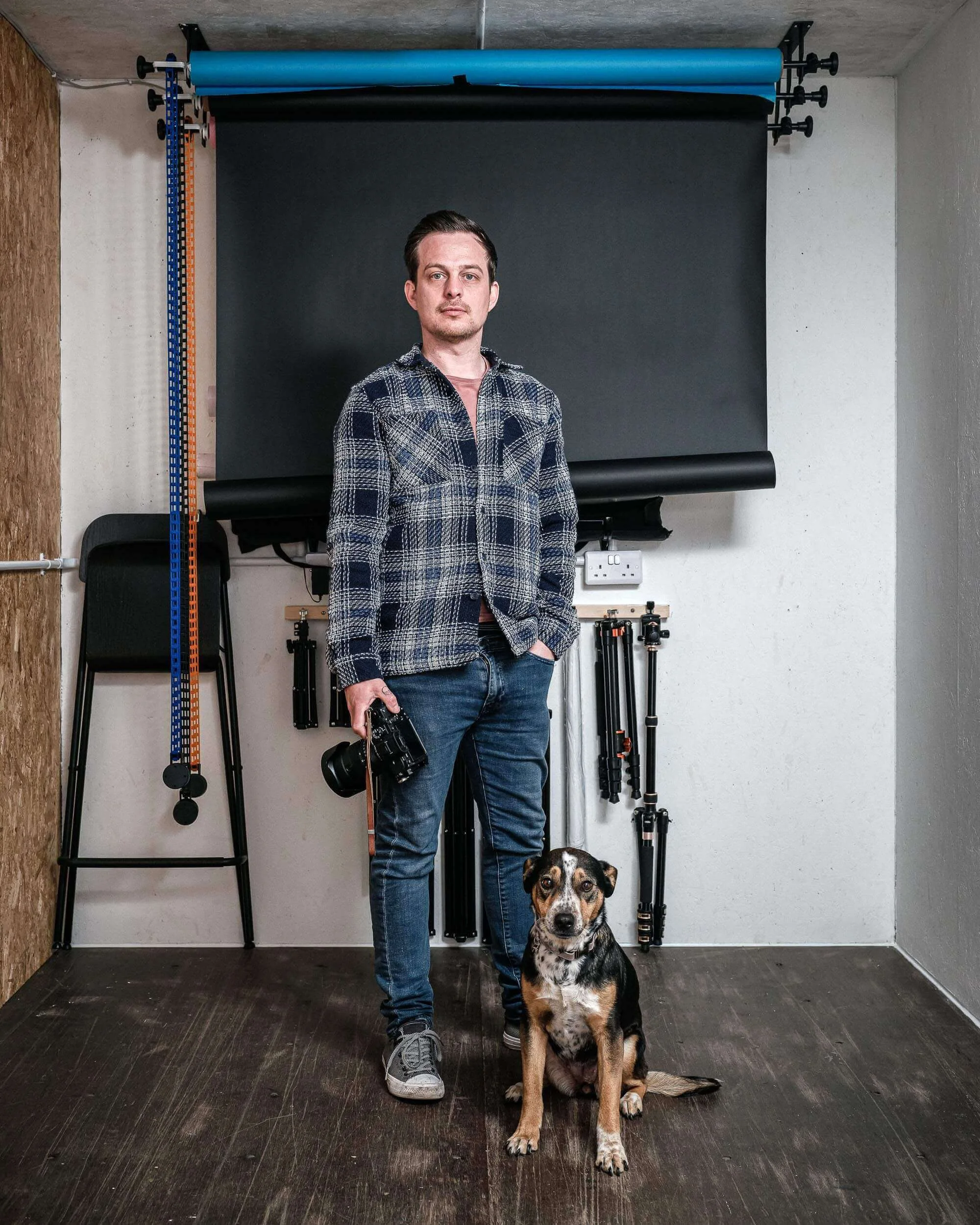
(Portrait by @jonathan_kiernan)
Hi, I’m Harley, a Manchester-based commercial photographer and conceptual artist. My commissioned work is centred primarily on people, from portraits and headshots to PR, editorial, corporate and event photography. Alongside this, I develop socially engaged and conceptual projects exploring identity, representation and contemporary culture.
Photography has been part of my life for almost 30 years, but over the past decade it has developed into both a commercial career and an independent artistic practice. Growing up in Salford, where pursuing a career in the arts was often dismissed, has shaped my interest in who is represented, how images construct identity and whose experiences are given space.
Since 2019, I have worked collaboratively with people and communities including those experiencing homelessness, LGBTQ+ individuals, autistic people and families, and Ukrainian refugees. These projects have helped shape an approach to socially engaged photography built around collaboration, consent and giving participants an active role in how they are represented.
Alongside my artistic practice, I have delivered more than 300 commercial commissions for clients ranging from sole traders to multinational organisations. I specialise in photographing people, particularly through portraiture, headshots, PR, editorial, corporate and event photography, while also working across personal branding, architecture and product photography.
Although my commercial and artistic practices have different purposes, both are grounded in an interest in people, context and collaboration.
Selected Press
British Journal of Photography / 1854
The Family Ogden — 2024
Feature exploring collaboration, autism and representation.
Read feature →
Portrait of Britain
Selected photographer
Work selected for the Portrait of Britain marketing campaign.
View feature →
OpenEye Gallery
(Re)Settled: Ukrainian Stories in Wigan
Exhibition, publication and public programme developed from collaborative work with Ukrainian participants.
View project →
Manchester’s Finest
Photographer profile
Interview exploring my route into photography, commercial practice and socially engaged work.
Read interview →
LensCulture
Photographer profile
Selected work and profile exploring my conceptual and socially engaged photographic practice.
View profile →
Sky Arts / Rankin
Rankin’s 2020
Selected photography featured as part of the Sky Arts / Rankin programme.
View feature →
More Press →
Exhibitions & Presentations
53TWO - Disability and the Digital Avatar
Solo Exhibition
OpenEye Gallery — HOME
Group Exhibition
OpenEye Gallery — Crossing Sectors
Group Exhibition
Hunger Magazine — UnSEEN
Group Exhibition
Selected Awards & Development
Portrait of Britain Vol. 7 — Winner, 2024
Open Eye Gallery — Crossing Sectors, 2024
GMCA Inspire Fund - Project Fund, 2023
Everyday Wigan — Taking Shape, 2023
Portrait of Britain Vol. 3 — Shortlisted, 2020
Historic Photographer of the Year — Featured, 2019
Education
University of Salford
MA Socially Engaged Photography
University for the Creative Arts
BA (Hons) Photography
Roles
Everyday Wigan CIC - Director
Professional Memberships
Association of Photographers
Royal Photographic Society
Socially Engaged Photography Network
Photo Ethics Centre Certified
Statement of Ethics
-
As author or facilitator of photographic projects it is my responsibility to meet the ethical requirements laid out in my statement. It is also my responsibility to ensure the safety, agency and equity of participants wherever possible.
Accountability means not only planning for potential risks to these responsibilities but also following up on future outcomes resulting from the making and publication of work.
Recognising and acknowledging my part in mistakes and negative outcomes with the aim to improve my practice going forward.
-
As a socially engaged photographer my practice revolves around engaging individuals and groups in photographic projects.
A process which is dependent on the involvement of others.
My aim is to recognise the contributions of participants and involve them in each step of the creative process, from conceptualisation to production and publication.
This also means recognising and facilitating contributions is part of redressing the power dynamics between artist and subject, challenging the concept of the ‘auteur’ photographer
-
As photographic mediums proliferate quickly and easily through a myriad of channels, it is my responsibility that participants and collaborators are well informed on the potential use of project work.
It is only through being well informed that they can consent to inclusion in a project and its future publication.
This ongoing consent will be affirmed at each stage of project development and into the future, recognising how circumstances change as opportunities develop and evolve.
-
It is important to recognise the diversity of the ‘groups’ I work with and that individuals may identify in many ways.
My aim is to respect each participant as an individual and recognise their own uniqueness within the work.
It is also important that I work to support the platforming of voices that are often suppressed.
-
As an outsider to many of the cultural groups I work with it is my responsibility to educate myself on their history, context and representation.
Not only to understand their current challenges and goals but also to anticipate potential risks to my ethical guidelines and responsibilities.
It is also my responsibility to anticipate and research the individual participants and groups for potential ethical, project and participant risks.
By being informed I also prepare myself for recognising my own biases and potential for stereotypical representation.
-
Working with diverse cultural groups means recognising that within those groups there is still a diverse range of individual characteristics.
In order to promote equality and equity I will work to remove access challenges and restrictions and facilitate the opportunity to participate.
-
In support of my ethics I have and will continue to work with and for under-represented groups.
This includes:
Ensuring ongoing informed consent with current and past project participants,
Ensuring participant recognition in publications and exhibitions,
Profit sharing of published work to appropriate charitable organisations.
Discounted commercial rates for groups, CIC’s and charities,
Free mentoring and advice sessions,
Free group sessions for schools and colleges,
Sharing stories of success and highlighting potential access restrictions,
Highlighting opportunities for under-represented groups,
Sharing advice and experience of applying for, receiving and utilising funding, commissions and opportunities,
Commitment to CPD work around ethics and representation.