
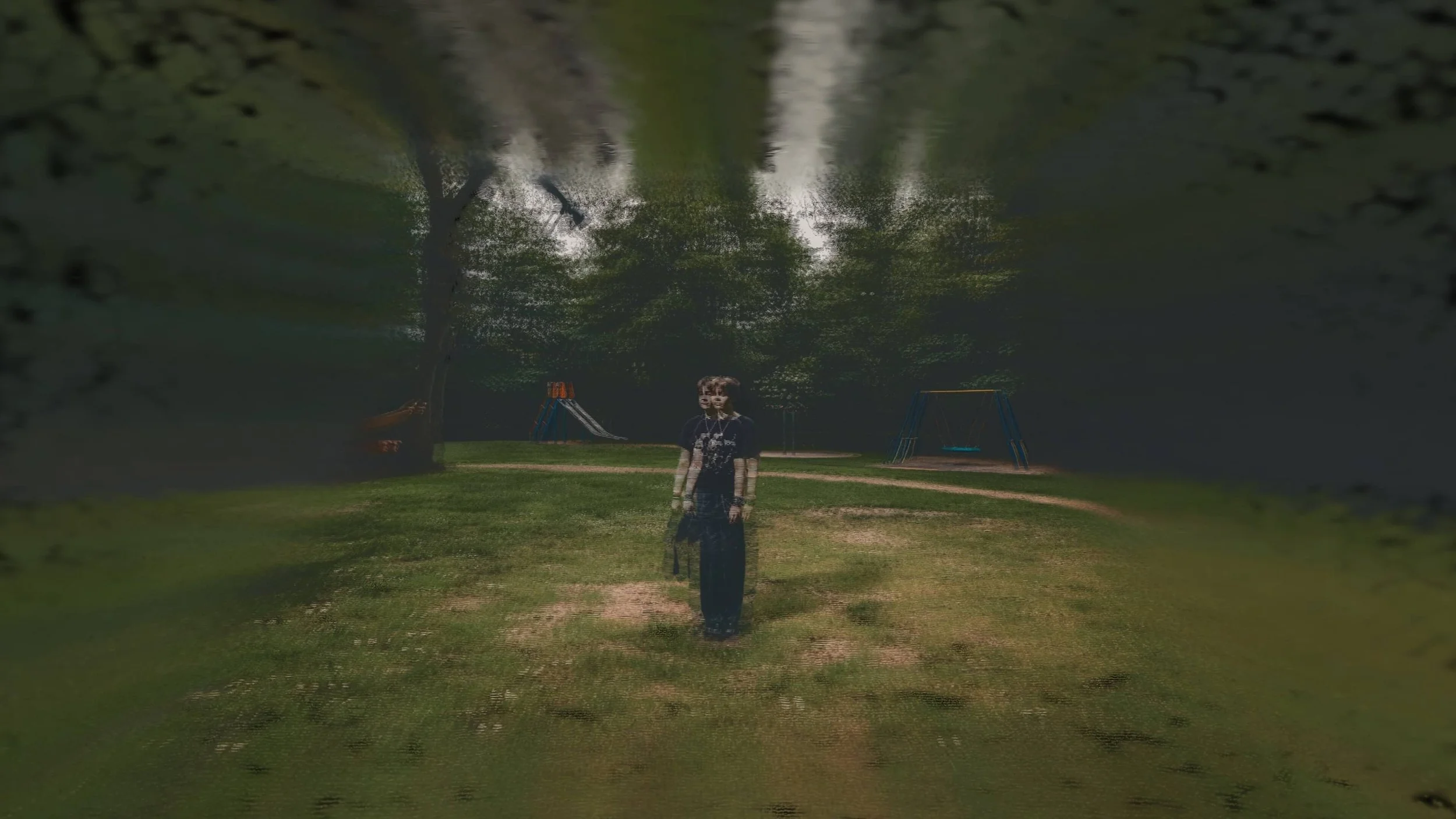
Disability and the Digital Avatar
2024-26
Disability and the Digital Avatar explores how disabled gamers experience identity and representation within video games.
The project began after hearing a conversation between game streamers were one shared selecting a character partly because their design reflected their own physical disability. This raised a wider question: how do disabled people find representation in games, particularly when their disabilities are less visible or cannot be easily reproduced through character design?
Through surveys, personal narratives and collaboration with participants, I initially expected to find a demand for more characters who physically reflected disabled players. Instead, participants frequently prioritised expression over resemblance. They chose characters because they were interesting, powerful or enjoyable to play, and valued games as spaces for fantasy, accomplishment, experimentation and social connection.
These responses suggest that gaming can offer a form of exo-experience: an opportunity to inhabit identities and experiences beyond the limits of everyday life. Disabled gamers do not necessarily need a protagonist who looks like them. However, they still value worlds in which disability is visible, meaningfully represented and treated with respect.
Using photography and Gaussian splatting, I translate participants experiences into interactive, three-dimensional digital forms. By moving between the photographic image, the digital avatar and the virtual environment, the project examines the relationship between actual and constructed identity, while questioning where photographic representation ends and digital experience begins.
This video is intended to play simultaneously with the six videos featured to the right. Unmute the left video to hear the full soundtrack.
Below is a description of presentation design and my process.
Presentation
Gaming haș it’s own environmental experience, particularly with regard to dedicated gamers who have built up and decorated their space to reflect their interests. The aim for this presentation is to situate the viewer within that space.
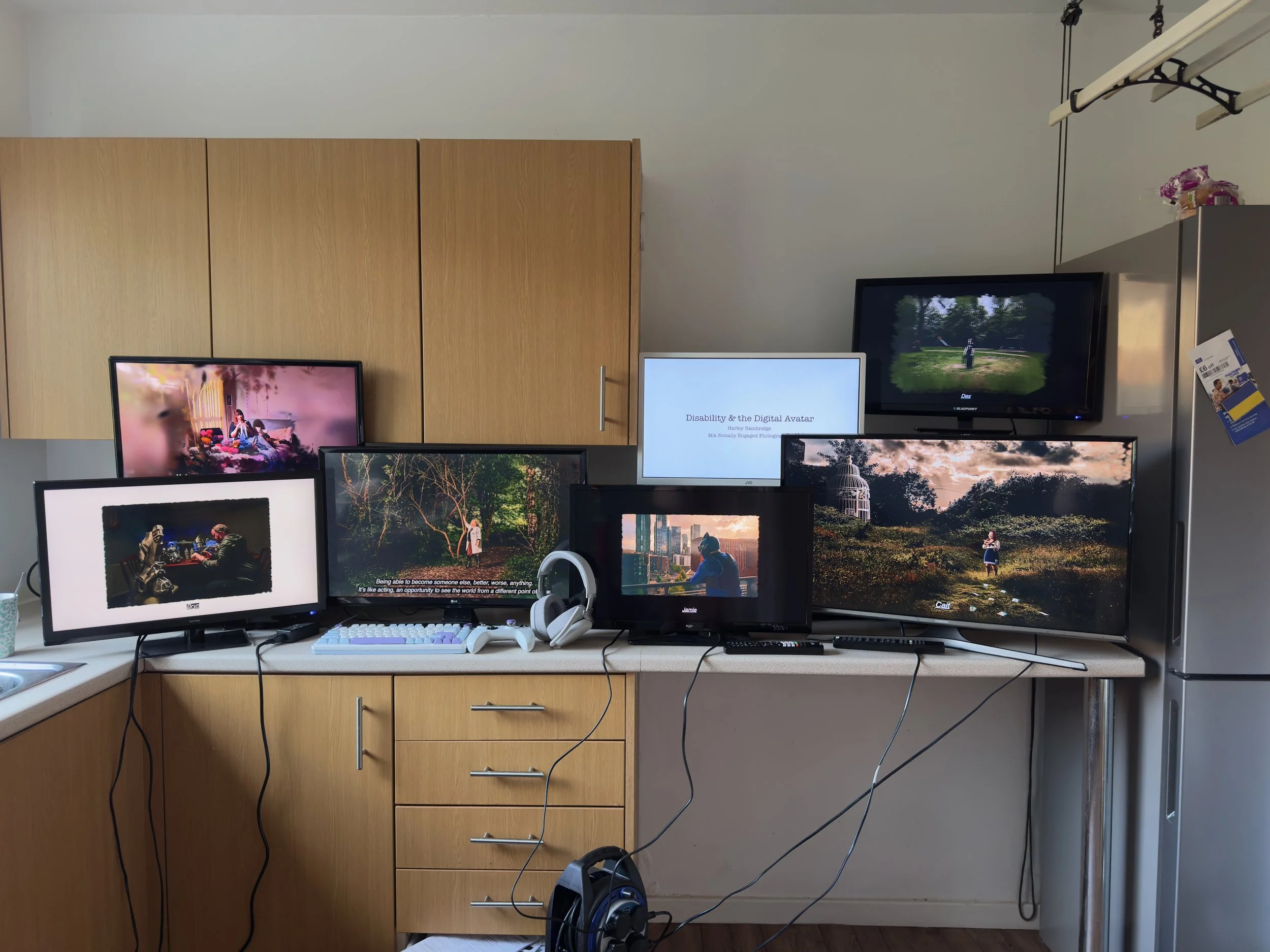
At this time I await the MA Final Show where the work will be fully realised. For now, I include a photograph of a visual test of the concept as example of how this work will be presented.
Each screen displays a different rotation of all six participant videos, the seventh screen provides contextual text and a soundtrack available on headphones.
The final elements will be the work being positioned on a desk and with access to a chair.
Process
Gaussian Splat
Creating a Gaussian Splat involves combining dozens of individual images through a predictive algorithmic process which calculates camera position, depth, etc to render a fully manipulable 3D render.
The example to the right was made using a dedicated phone app, Scaniverse.
This output was then rendered with SuperSplat to make the render viewer manipulable and lightweight enough to render in realtime in a browser.
ML Sharp
This process differs in that the render is constructed from a single image. The specific process used is ML Sharp, developed by Apple to facilitate their expandable image feature in iOS 27 and their depth effect 3D imagery on Apple Vision headsets.
The rendering is predictive and generative, creating depth based of image cue such as depth of field and perspective.
This allowed for a much more controlled approach to the photography and speedier process for participants. It also opened up the opportunity for more complex editing of the original material before processing.
Also rendered using SuperSplat, the output results in an interesting image breakup where the algorithm lacks information to back fill detail.
All participant images went through this rendering process, a camera path was keyframed and rendered in SuperSplat and the output was then edited in FinalCut.
The soundtrack is made up of video game theme songs selected from the participants’ favourite games or their cosplay character inspirations.